
Why dish soap ruins aircraft paint
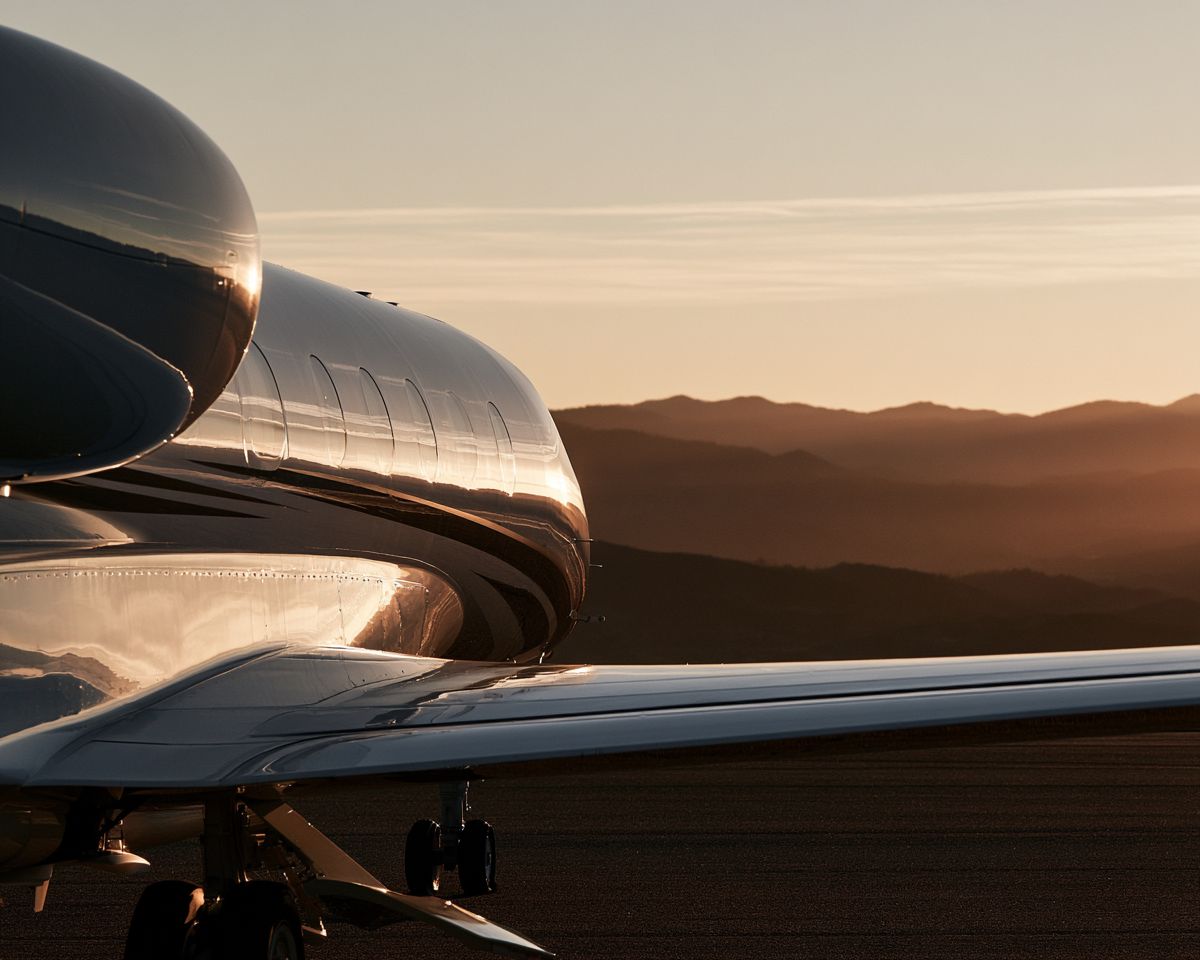
A gallon of household dish detergent costs about eight dollars. A full strip and repaint on a midsize business jet runs into six figures and takes the aircraft off the line for weeks. Between those two numbers sits a decision that gets made on the ramp, quickly, by someone who was trying to be helpful.
The detergent is not a shortcut. It is a transfer of cost from this week to a later one, and the later one is always larger.
What dish detergent is engineered to do
Household dish soap is built for one job: strip lipids completely. Its surfactant package is designed to emulsify baked-on fats and lift them off a hard, chemically inert surface: ceramic, glass, stainless. It succeeds because it is indiscriminate.
An aircraft exterior is neither hard nor inert. It is a layered system. A high-solids polyurethane topcoat sits over epoxy primer, over a treated aluminum or composite substrate, and above that topcoat sits whatever protection was last applied. Wax, sealant, or a coating cross-linked to the surface through covalent bonding.
That protective layer is sacrificial by design. It is there to be consumed so the topcoat is not.
Dish soap removes it on the first wash.
The sacrificial layer is the whole point
Once the sacrificial layer is gone, the topcoat carries the environment directly.
- UV degradation accelerates immediately. Polyurethane resins break down under sustained ultraviolet exposure, and the visible result is paint oxidation. That is the chalky, flat cast on the upper wing surfaces and horizontal stabilizer that no wash will bring back.
- Thermal cycling works the surface harder. An airframe that leaves a ramp at 40°C and cruises at −50°C moves through that range on every leg. An unprotected topcoat expands, contracts, and micro-fractures without the buffer of a bonded layer.
- Contamination bonds instead of sitting. Exhaust soot, hydraulic mist, brake dust, and industrial fallout embed into an open topcoat rather than releasing at the next wash.
The owner sees none of this for roughly a season. Then the finish goes flat, and the correction required to bring it back is measured in mils of clearcoat removed. That is a one-way operation on a coating system with a finite thickness.
Alkalinity, hydrolysis, and bare metal
Most household dish detergents sit meaningfully alkaline. Aviation-approved exterior cleaners are pH-controlled and qualified specifically because alkalinity is the problem.
Sustained alkaline exposure drives hydrolysis of the ester linkages in polyurethane chemistry, the topcoat's molecular backbone. It also attacks what isn't painted: bare and anodized aluminum etches, magnesium components are more sensitive still, and the anodic layer that protects them is not something a detailer can reinstate.
Residue is the corrosion mechanism
This is the failure mode that reaches the logbook.
Dish detergent is formulated to be rinsed under a running tap. It is not formulated to release cleanly from lap joints, fastener heads, control surface hinges, static wick bases, and drain paths.
What remains is hygroscopic. It pulls and holds atmospheric moisture against the substrate in exactly the locations that are hardest to inspect, and it does so continuously between washes. That is the initiation condition for filiform corrosion. It is the thread-like propagation that runs beneath paint film outward from a seam or a chip, invisible until it lifts the topcoat from underneath.
At Brown Field, a mile and a half from the coast-influenced border corridor, the marine layer supplies the humidity for free.
Collateral damage beyond the paint
- Elastomers. Aggressive surfactants leach plasticizers from rubber. De-ice boots dry, stiffen, and crack at the leading edge. That is a component with a replacement cost that dwarfs any wash program.
- Transparencies. Acrylic windshields and cabin windows craze under detergent contact, and the wiping motion that follows introduces the micro-scratching that scatters light on approach into low sun.
- Brightwork. Polished aluminum leading edges and props hold detergent film in the grain and go dull faster than they should.
The documentation problem
There is a quieter cost, and it is the one that shows up at sale.
Airframe manufacturers specify approved cleaning materials in the servicing chapter of the maintenance manual, and exterior cleaners are qualified against published industry standards for material compatibility. Household detergent is qualified against none of it.
A buyer's technical representative reads maintenance records closely. A finish with no record of what was applied to it, on an airframe with etched fasteners and residue history in the seams, does not get the benefit of the doubt. It gets a discount, or a pre-buy squawk that becomes a negotiating position.
What belongs on an airframe
The correct process is unglamorous and specific.
- A pH-controlled, aviation-qualified cleaner, diluted to the manufacturer's ratio rather than by eye
- Clean media, changed often. A single dropped mitt returns as swirl marks under direct light
- Full rinse and controlled drying, with seams and joints addressed deliberately rather than left to evaporate
- Reinstatement of the sacrificial layer: wax, sealant, or a bonded coating, so the next wash removes contamination rather than protection
- A record of what was used, so the next owner's representative has something to read
A clean airframe also holds a marginally smoother boundary layer, and operators tracking fuel burn across a fleet do notice the parasite drag penalty that surface contamination and paint roughness introduce. That is a genuine effect, but it is the smallest reason on this list. The reason that matters is the one written into the logs.
Before anything else, we look at the aircraft
Every airframe arrives with its own history: what was applied, what was used to wash it, and what the last few seasons on a given ramp actually did to the finish. That is not something to price from a photograph.
The Premier Assessment is an honest read on the finish inside and out, in person, and a clear picture of what's achievable. From it you receive a written scope and pricing specific to your aircraft, delivered by email, with a photographic record of the condition we found. No obligation. Just the information you need to decide.
Reach us directly. Call (888) 580-9080 · Text (619) 604-9503
© 2026 PREMIER AVIATION VENTURES LLC. All rights reserved. Brown Field Municipal Airport (KSDM) · San Diego, California
Registered office: 1401 21st Street, Suite R, Sacramento, California 95811
Aircraft detailing and appearance services. Ceramic coating certifications as applicable to airframe type. Complimentary assessments offered by appointment.